Introduction
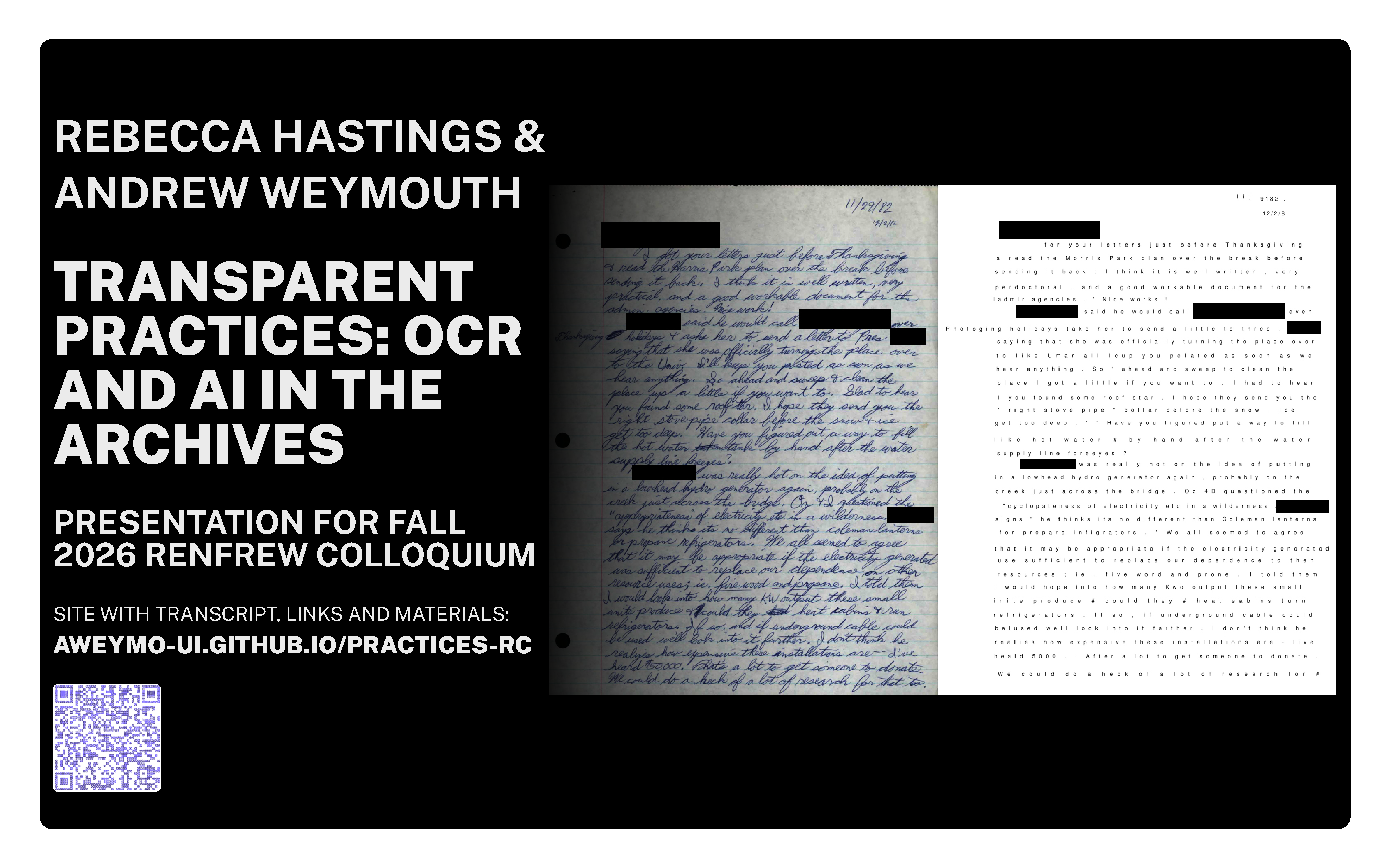
As the digital initiatives librarian for the Center for Digital Inquiry and Learning at the library, I create and maintain digital collections that highlight materials from our archives and across Idaho. If you visit any of our 150+ collections and open a scanned archival PDF, the document itself is really just an image of a page. The searchable, selectable text behind it is an invisible transcription of the document’s written content. Both the process of identifying and transcribing that text, and the resulting text layer embedded in the PDF, are known as Optical Character Recognition, or OCR.
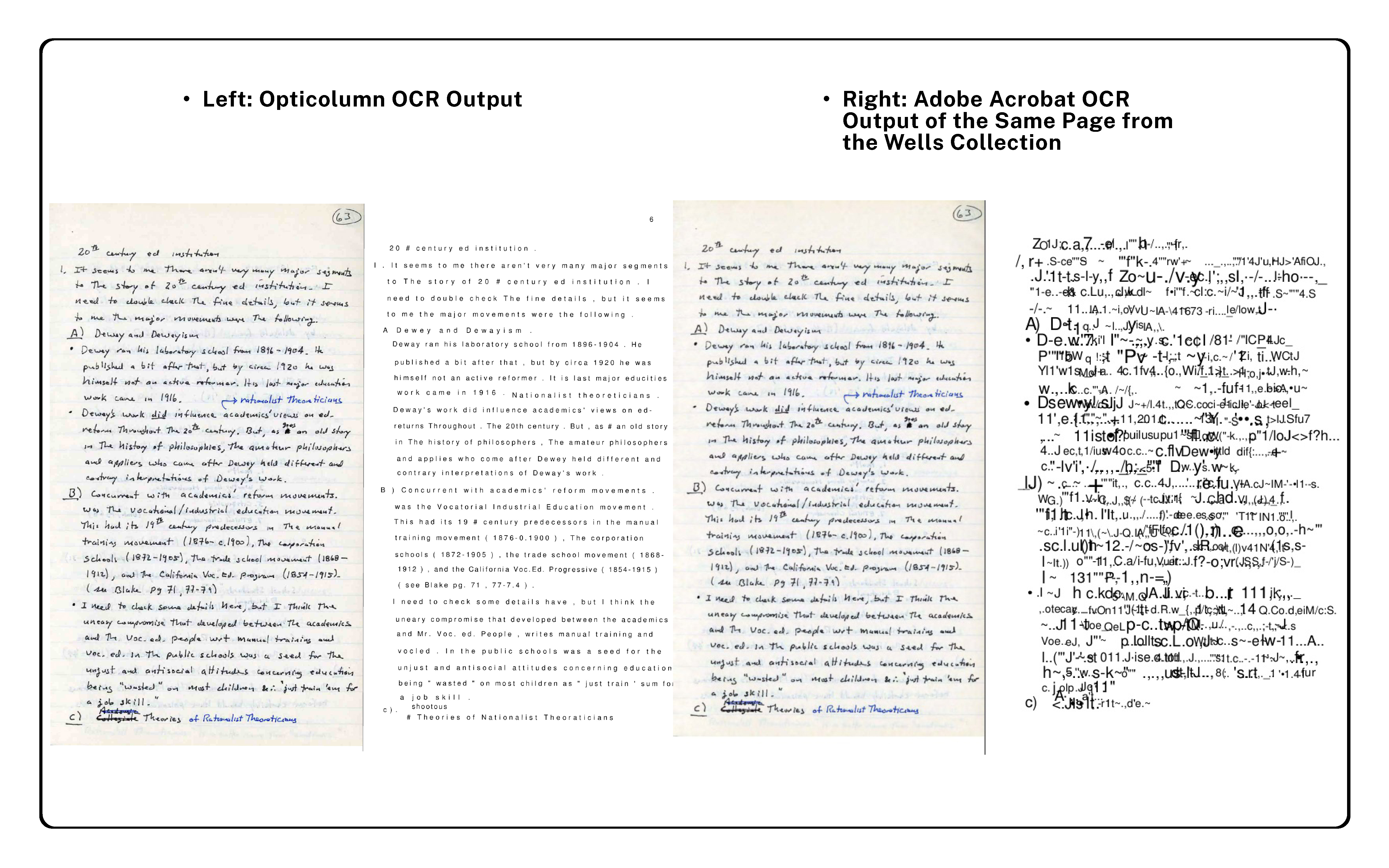
While this is an essential feature for patrons who use screen readers, like many accessibility improvements, it winds up benefitting everyone. Accurate OCR makes historical material more discoverable through the ability to keyword search and uncover connections between documents. With this in mind, it makes a huge difference if the OCR layer interpreting the page looks like the output on the left or the right of this slide.
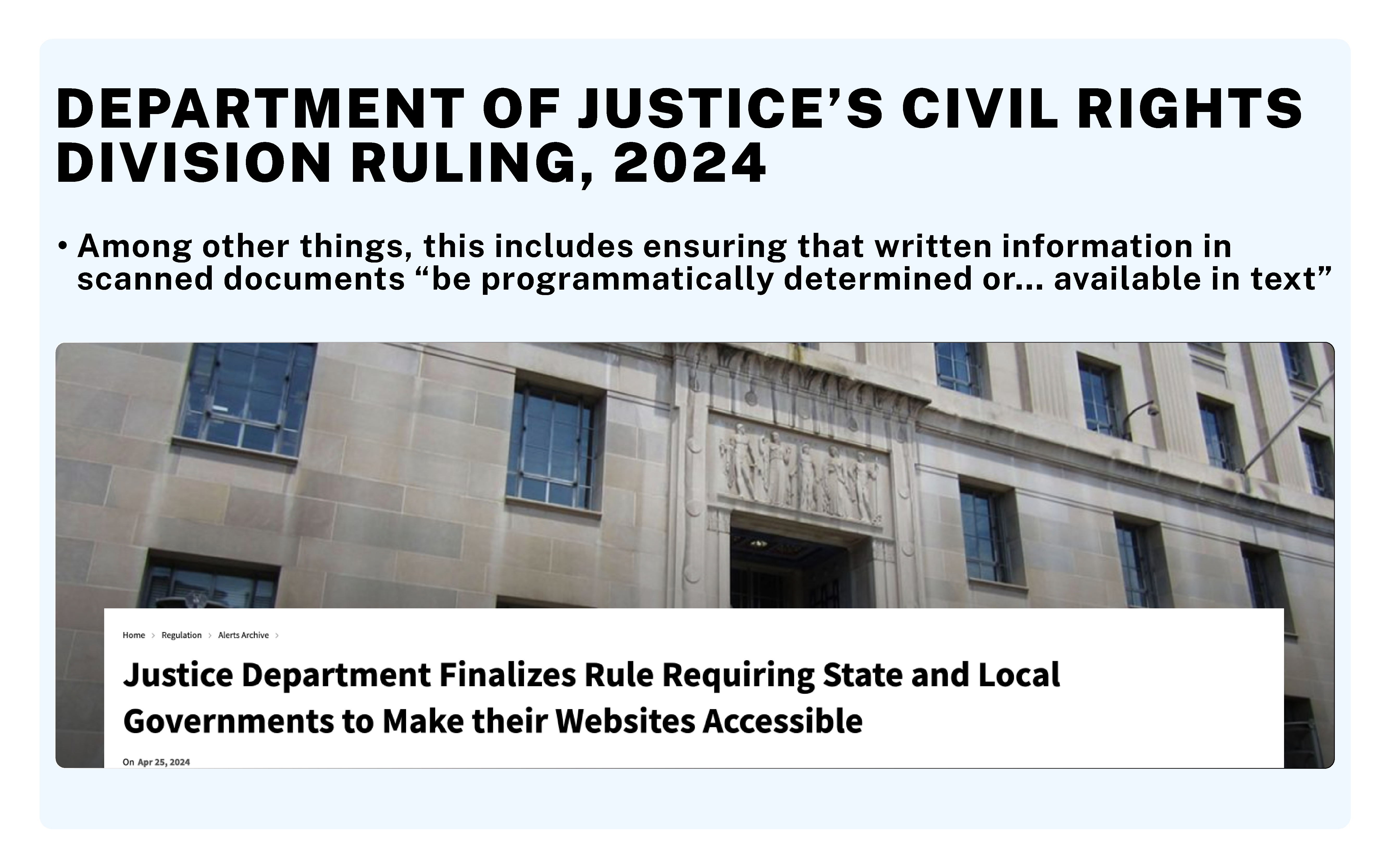
But because it is invisible, it’s easy to ignore or forget about if you aren’t regularly engaging with it. This quickly changed in 2024, when the Department of Justice’s Civil Rights Division issued a ruling requiring state and local governments to make their websites adhere to the Web Content Accessibility Guidelines’ 2.1 Level AA standards. Among other things, this includes ensuring that written information in scanned documents “be programmatically determined or… available in text”.

This coincided, of course, with the advent of large language model artificial intelligence, and with them a smaller gold rush of “Intelligent Document Processing” AI companies incorporating and offering anxious institutions a way to make their digitally hosted archival material compliant, frequently at a considerable price.
This presentation is based on an article of the same name that I co-wrote with Rebecca Hastings, digital archivist with Special Collections, as a case study for testing and implementing in-house OCR models and for understanding AI more broadly through the lens of archival ethics as described by the Society of American Archivists. Given that so much of AI marketing language revolves around being unprecedented, inevitable, and so blindingly contemporary that peer-reviewed research on the topic is relatively scarce, I also wanted to explore the historical context of how archivists have contended with these monetized breakthroughs, and how it affected the future stewards of those institutions.