Conclusion
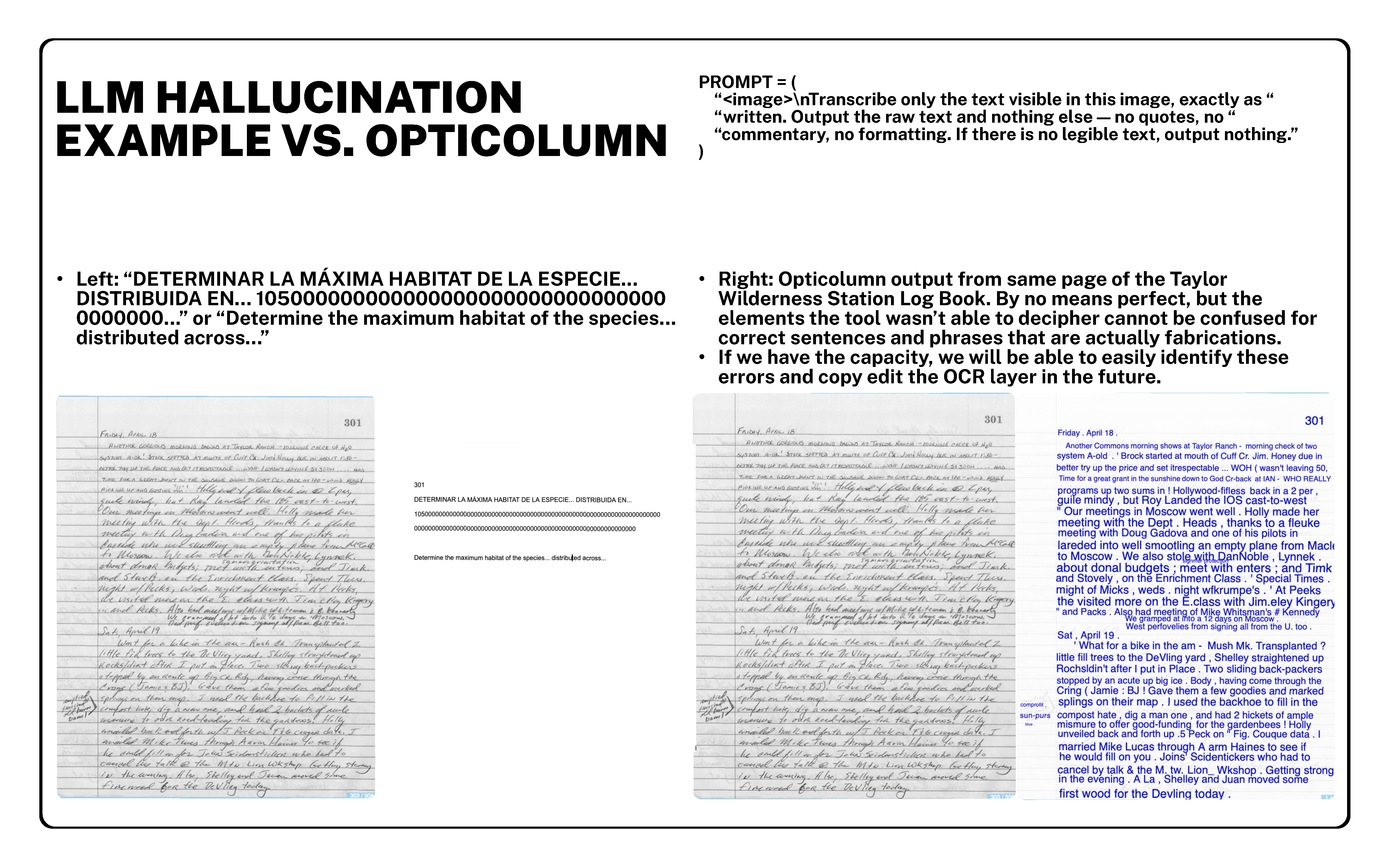
One purpose of this case study is to show that not all OCR tools are the same, and they don’t all fit with archival ethics in the same way. Evaluating different OCR tools against the archival ethics framework highlights important qualitative differences. We can evaluate a tool according to performance metrics such as accuracy percentages, processing speeds, and file size outputs, but assessing a tool more qualitatively against professional values helps us with ethical and responsible technology adoption.
We can go back to our sets of archival values, starting with authenticity and transparency. LLM models consistently generated plausible but fabricated text, and inserted text into outputs that had nothing to do with the text on the page - distractions and hallucinations. In some settings, these kinds of errors are perfectly fine, but in an archival setting, authenticity is preferred. Tools like Opticolumn generated imperfections that were recognizable: not only text accurate to the original, but clearly misread characters, garbled words, and text fragments - all transparent errors. Opticolumn also clearly documents its training data, can explain recognition methods, reproduce consistent results each time, and trace the source of errors.
In terms of access and equity, LLM tools performed better on poor-quality documents, generating “readable” text from challenging sources, and sometimes doing so faster than other options. This is a kind of access benefit - greater volume of output faster, potentially. But you have to balance that against authenticity risks. If someone’s only access to a document is through the OCR output, you really don’t want it to be full of fabrications. If there is capacity, NN OCR tools can greatly enhance access and with far more recognizable errors.
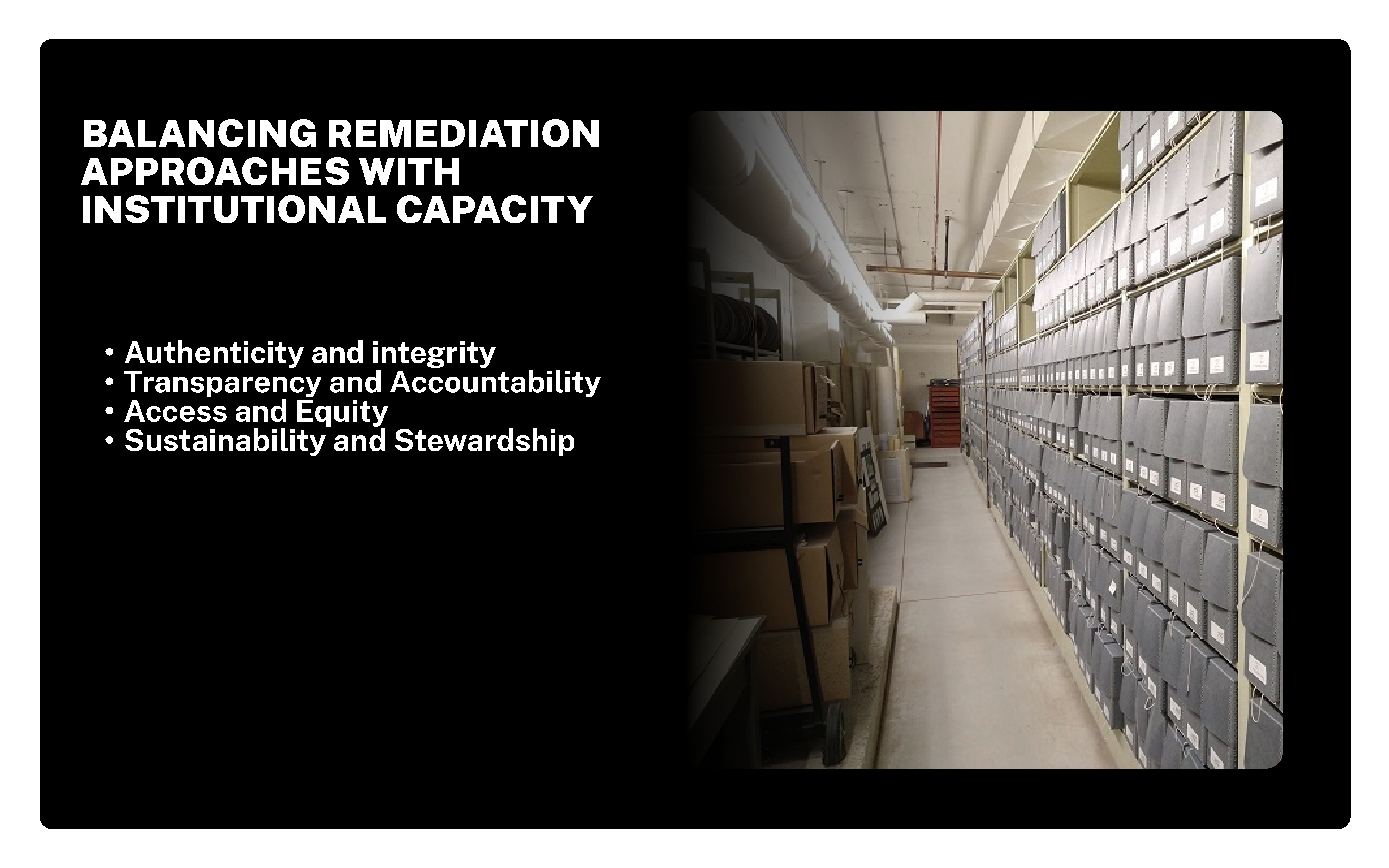
And LLM tools do not necessarily support sustainable archival workflows. LLM OCR tools can ease workloads and often don’t require a huge investment of time and expertise just to get started, but they might lead to dependencies on external services and involve opaque processes. Working with tools like Opticolumn required technical investment, staff time, institutional resources, and so on, but it helped to grow institutional capacity, expanded staff expertise, and resulted in a tool that can be openly maintained, modified, and used by anyone. These are important elements of archival sustainability.
No single OCR tool serves all archival needs. LLM tools offer genuine advantages in certain contexts, particularly for institutions that lack technical capacity or have very challenging source materials. But for institutions that have the capacity, NN approaches align better with archival ethics, allowing for more authentic, transparent, and sustainable OCR of archival materials. Each institution has to make a decision based on their own context.
This case study also gets at some broader lessons for archivists, essentially that the archival ethical framework, the questions that we’re always asking ourselves about accuracy, accessibility, authenticity, transparency, and so on, they have remained remarkably stable over time. The AI and OCR question is not the first time that archivists have had to very deliberately assess the usefulness of a new technology, acknowledge its trade-offs, and make decisions that really serve both the materials that we steward and the communities that use our collections. When the world is changing around us, we can return to our professional ethical standards for guidance.